ECHTRAI JOURNAL EDUCATION PROGRAMME
in collaboration with the Liceo Artistico “De Fabris “, Nove – Italy, A School for creative studies.
INTRODUCTION
by Baz Nichols, Editorial and Creative Director, Echtrai Journal.
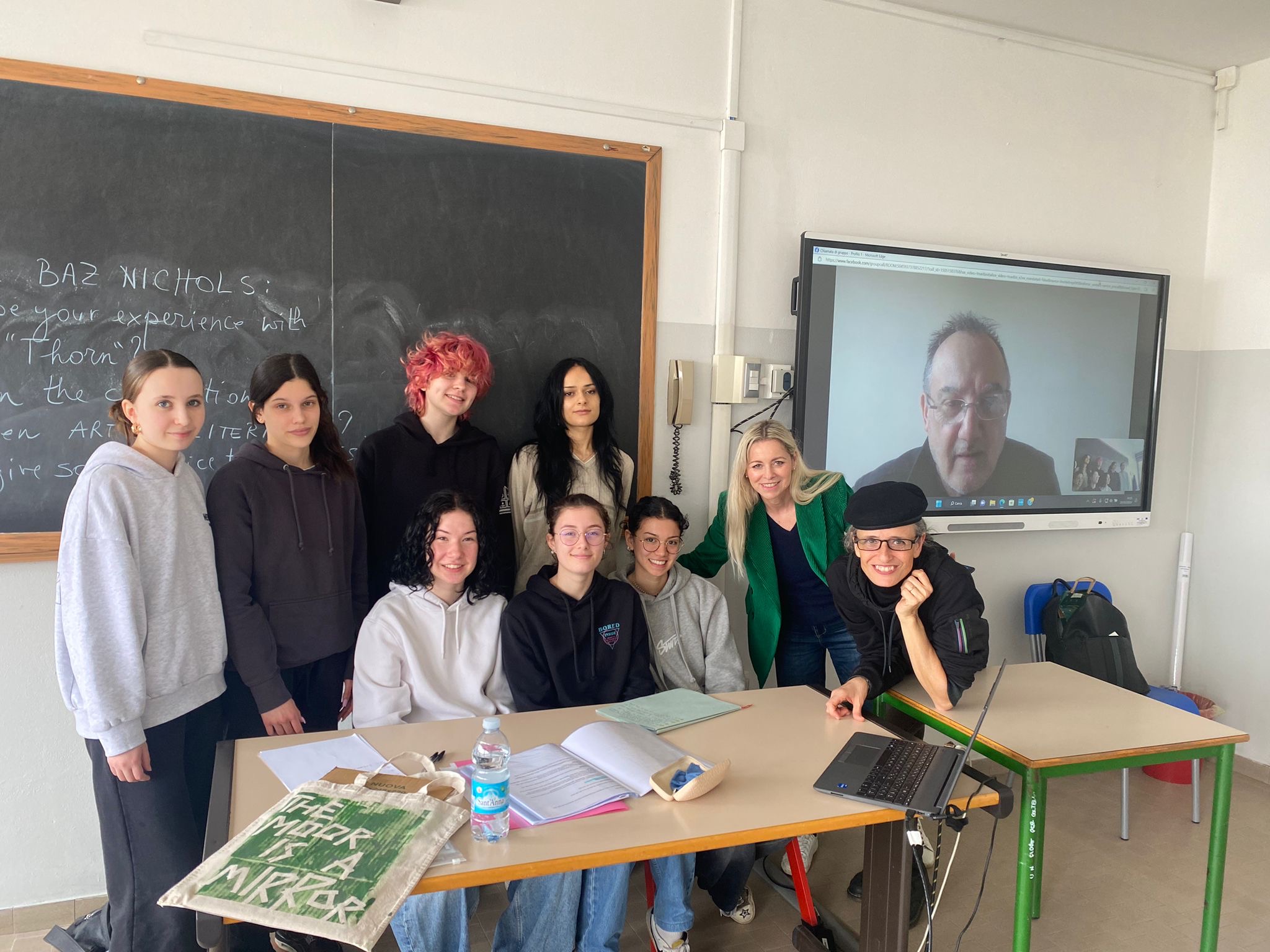
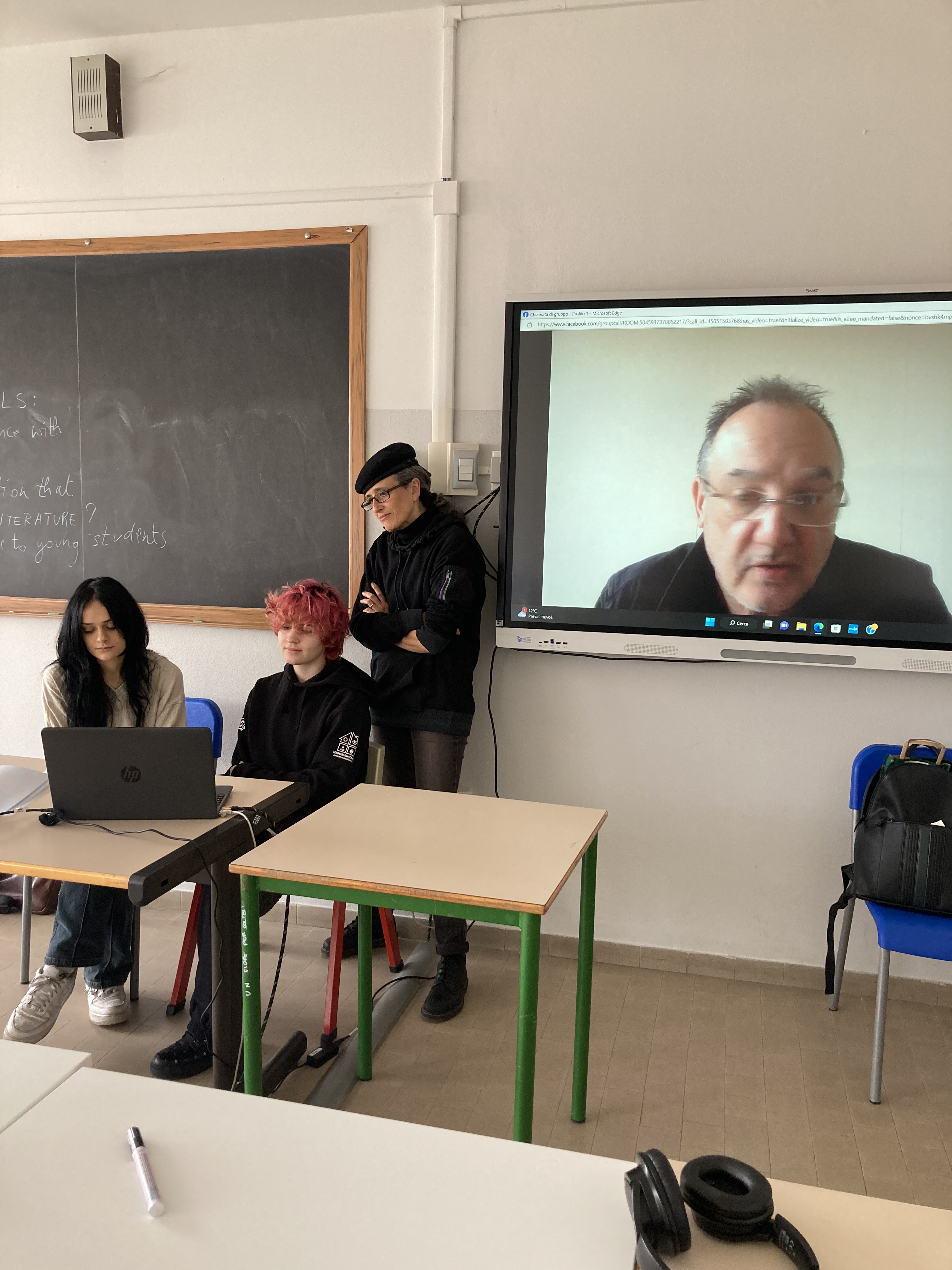
Soon after the publication and launch of the Pilot Edition of Echtrai Journal, I was approached by Stella Sebellin, a lead tutor at the Liceo Artistico “De Fabris” , in Nove, Italy, who had read and become inspired by the journal, enough to introduce it to her students, not only as a source of inspiration, but also as the impetus for a season of work informed by both the journal and my personal writings. It was with great delight and surprise that our work had found its way into the lives and imaginations of a group of people many hundreds of miles away, and from a markedly different cultural context. It struck me though, that despite this cultural differentiation, the way that we make art and use language – there was also a commonality of vision – a vital connection had been made between us and a group of students, and this was a connection not only to be valued and encouraged, but also nurtured and fed.
Due largely to the extraordinary co-ordinating efforts of the artist/curator, Belinda Guerriero, the inspirational leadership of English tutor, Stella Sebellin, and with additional technical support from writer, Anna Chiara Bassan and curator, Monica Pirani – we set about developing a programme of activity in order to engage and inspire the students, to immerse them in their own landscapes (real and imagined) , and hopefully make this the formative basis for some of their own writing, art, and creativity.
It is equally refreshing that in these times of mass screen addiction, combined with the temptations and distractions engendered by the virtual worlds, that a group of students should become so passionately involved in a programme of activity largely dedicated to those parts of the world that have been left by the wayside – marginalised and forgotten, and readily consigned to the vaults of ‘forgotten history’ .
Over the course of the next year or so, we hope to take the students further along this journey, and encourage them to engage with these places not only more frequently and more intimately, but also from unique and contrasting perspectives – to encounter the landscape both physically, and spiritually – developing their own unique ‘sense of place’, and sense of history, and reporting back what they see, and more importantly, what they ‘feel’, and how it moves them, how it might alter their perspective, and what, if anything, is important about such an endeavour in such feverish times. There are many stories to be told here, more truths to be uncovered, more secrets to be revealed in the words and visions of these young students.
We live in a moment of history where the future is so uncertain that we often fail to recognise the significance of that which surrounds us every day – what we are losing – at such an unprecedented rate that we barely notice. Eroding shorelines, collapsing buildings, submerged villages, lost languages and cultures, deforestation, dissolving ice caps, lost and severely at risk species of animals – all of these things combine to warn us of an immense and imminent ecological shift on a scale never previously experienced by humans.
It gives me great satisfaction then, to know that there is a small, but intelligent and dedicated group of individuals, living in the heart of a most beautiful area of Italy, about to embark on their own journey of discovery. These young, promising students I hope, will continue to carry with them some of the stories and sense-impressions that comprised their most formative years. It gives me immense joy that our journal and influence might play a small but important part of not only their education and developing self-awareness, but also a deeper awareness and appreciation of the importance of creatively documenting the landscapes around them that may be in danger of loss, or at the very least, in sharp decline.
For us, this is simply a beginning – the start of something much greater, and perhaps (hopefully) far wider-reaching. There is currently a groundswell of interest in such marginalised places, a movement that is steadily growing and gathering momentum. Perhaps this is a result of a worldwide shift of consciousness in which a threshold has been crossed, a barrier has been breached, as we collectively watch our world enter into a phase of what might all-too-readily be perceived as its final phase.
Never before has it been so crucial to record these losses, and equally there is now a responsibility that lies with all of us to involve our successive generations in the process of renewal and restoration. Only by knowing, feeling, and understanding at a very deep personal level, what we have lost, or are in the process of losing, can these next generations of humanity hope to conserve or regenerate the places that have shaped us, and given us a home.
BGN, AnMór Studio, Aberdeenshire, 2024.
 AnMór Studio