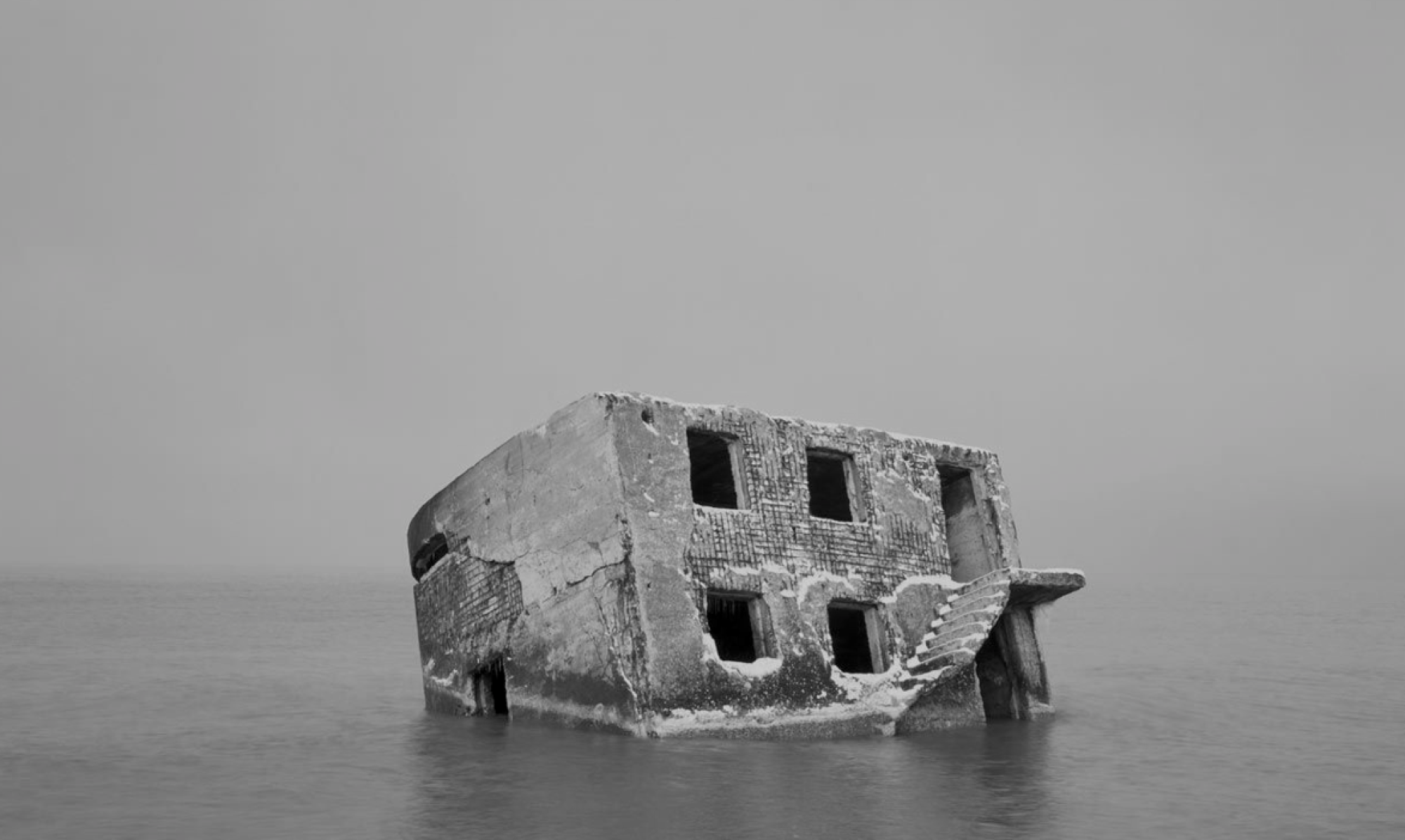

Relatively unknown, even today, is the war of espionage that took place in the polar Arctic, that legitimised the term – ‘Cold War ‘ as a historical truism. After the close of World War 2 late into the 1940’s, the high northern regions of the earth were known to be the closest point between the two major superpowers of the USA and the USSR (Union of Soviet Socialist Republics) . As the ongoing Cold War escalated, both continents had recognised the strategic value in using the Arctic as a site for listening in on the opposition’s communications, as well as providing opportunities for providing early warning against possible nuclear attack – The USA set up the DEW (Distant Early Warning) lines, a network of highly covert radar and scanning outposts designed to intercept Russian communications and rapidly deploy defences and early warning operations . Senior U.S military strategists had long predicted that if a 3rd World War should ever break out, its strategic centre would be the North Pole, and as a result, the Arctic became the perfect location for both nations to engage in electronic eavesdropping and espionage.
During the late 1950’s and early 1960’s, both superpowers realised the importance of the small floating islands of ice that drift around the arctic in long, circular patterns. These freshwater islands, calved from ancient glaciers were substantial and stable enough in size and depth to become the location for covert listening stations, equipped with highly advanced acoustical instruments that were capable of eavesdropping on incoming signals from hostile submarines, and armed with a range of antennae and receivers that could intercept telecommunications from the other side. Personnel would be dropped in to these sites for up to a year at a time, often in treacherous and hostile weather conditions, and with meagre supplies. It was a precarious existence, and a perilous way to spy., but in terms of strategic intelligence, it was necessarily invaluable.
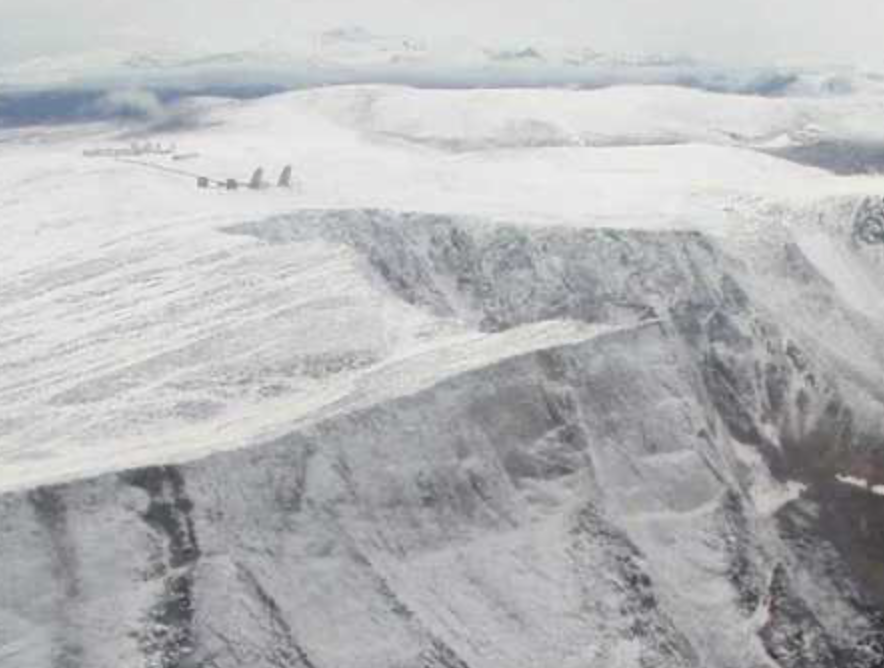
Telecommunications reconnaissance, also popularly referred to as SIGINT, ( a contraction of the words Signals Intelligence,) gained in importance as a defensive and early warning strategy, as well as a network for gathering and collating intelligence on oppositional planning and movements. The Arctic ‘Drift Stations’ were crucial in obtaining a strategic advantage for both sides. At one point , both Russia and the USA had stations on Big Diomede Island, and Little Diomede Island respectively, that were in such close proximity, that they became conjoined by an ice bridge. This also became a major disadvantage, as in the height of winter, the weather conditions became too hostile for manned operations and both sides abandoned their islands, bringing all activity to a rapid halt.
The Russians were the first to adopt the idea of drift stations, seeing them as ideal locations for scientific research into geophysical, climatic, and oceanographic processes, and the first station, NP-1 (North Pole-1) began operations in 1937. It was only during the advent of the Cold War era, that ice stations were commissioned for military and ‘special operations’ usage. At the end of the Cold War, those stations that hadn’t been decommissioned and subsequently abandoned, allegedly reverted to their original designation as “research” sites, although due to the rapid shrinkage of ice floes caused by global warming, many stations have been deserted and left to dissolve into the ocean. There is a weight of opinion, albeit speculative, that the American NSA (National Security Agency) CIA (Central Intelligence Agency) and certain western allies still maintain a foothold at unspecified Arctic locations, especially as political and strategic sensitivities have been heightened over the recent Russian invasion of Ukraine – many believe that what is publicly declared as “research” at least partially constitutes intelligence gathering, comms monitoring, and potential espionage. More often than not, the intelligence community hides its operations under cover, yet in plain sight, and this possibility certainly cannot be discounted.
THIS CASE STUDY WILL BE PERIODICALLY UPDATED AS FRESH RESEARCH MATERIAL AND ASSOCIATED DOCUMENTS BECOME AVAILABLE AFTER DECLASSIFICATION BY THE US GOVERNMENT.
Many of the abandoned sites have been dismantled or lost to the ice since the Cold War era, however, many sites have either been preserved in the ice, or continue with polar scientific research, or a mixture of research and ‘reconnaissance’ and intelligence gathering. A handful of sites remain Top Secret to this day, with notable sites used by the NSA as part of the North Warning System >
Alpha / Fletchers Island -T3
ALERT
Project ICEWORM (Greenland tunnel network)
Icy Cape, Cold Bay, Storm Hills, Point Lonely, Hall Beach
 AnMór Studio