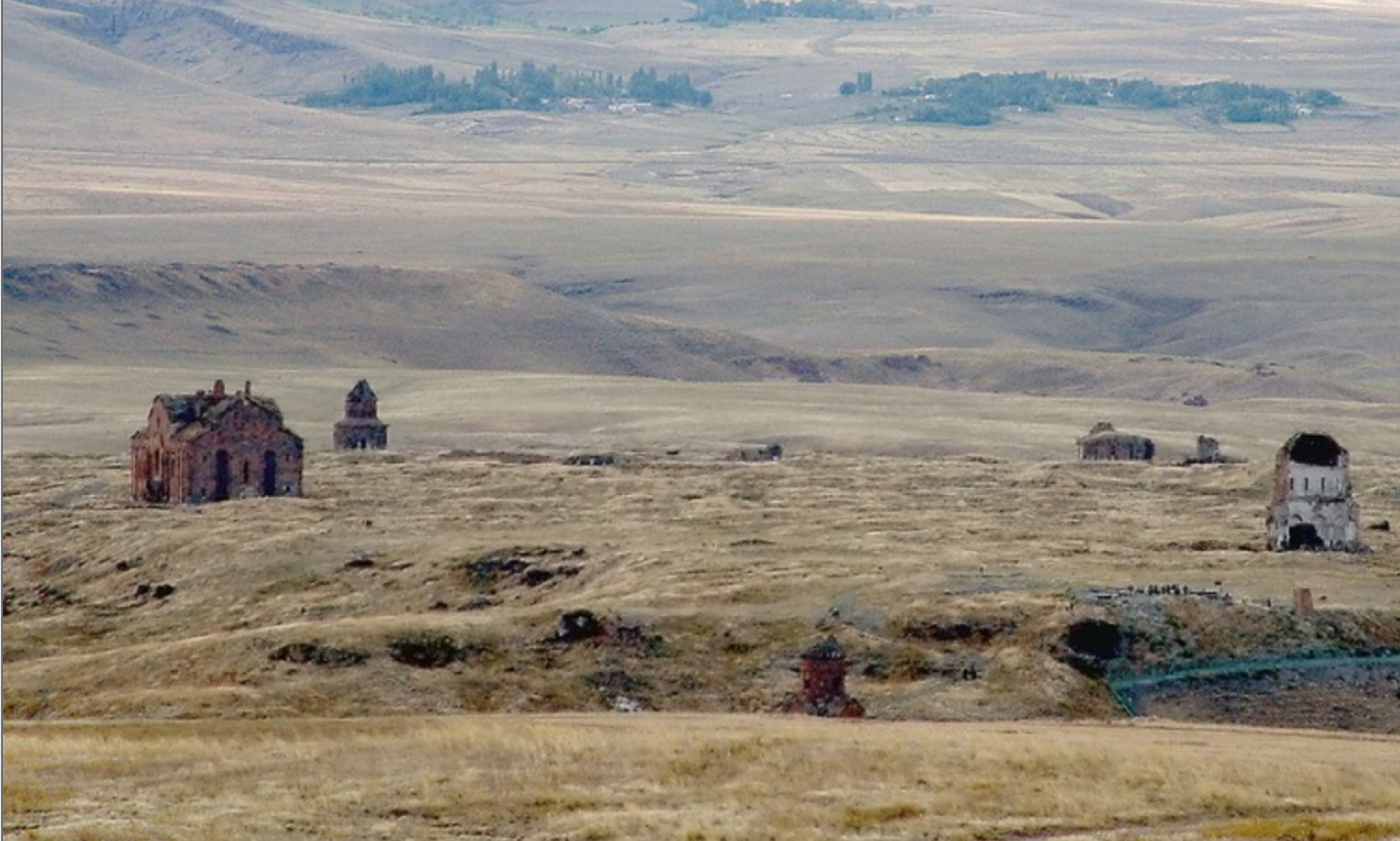
Ani – (Armenian: Անի; Greek: Ἄνιον, Ánion; Latin: Abnicum; Turkish: Ani) – is a ruined medieval Armenian city now situated in Turkey’s province of Kars, next to the closed border with Armenia.
Between 961 and 1045, it was the capital of the Bagratid Armenian kingdom that covered much of present-day Armenia and eastern Turkey. The iconic city was often referred to as the “City of 1,001 Churches,” though the number was significantly less. To date, 50 churches, 33 cave chapels and 20 chapels have been excavated by archaeologists and historians.
SOURCE: Wikipedia
Founded more than 1,600 years ago, Ani was situated on several trade routes, and grew to become a walled city of more than 100,000 residents by the 11th century. In the centuries that followed, Ani and the surrounding region were conquered hundreds of times — Byzantine emperors, Ottoman Turks, Armenians, nomadic Kurds, Georgians, and Russians claimed and reclaimed the area, repeatedly attacking and chasing out residents. By the 1300s, Ani was in steep decline, and it was completely abandoned by the 1700s. Rediscovered and romanticized in the 19th century, the city had a brief moment of fame, only to be closed off by World War I and the later events of the Armenian Genocide that left the region an empty, militarized no-man’s land. The ruins crumbled at the hands of many: looters, vandals, Turks who tried to eliminate Armenian history from the area, clumsy archaeological digs, well-intentioned people who made poor attempts at restoration, and Mother Nature herself. Restrictions on travel to Ani have eased in the past decade, allowing following photos to be taken.
 AnMór Studio